In the Comino Valley, history and legend come together, as do the mythological tales that want this green land originally inhabited by Janus, ancient Italic god of the sun, of openings, beginnings and endings. In his presence he found refuge Saturn, driven out of the’Olympus by his son Jupiter, He was welcomed and became involved in the life of the kingdom, teaching men to farm, build houses and live civilised lives.
Saturn ruled Italy by gathering the rebellious peoples scattered over the mountains, giving them laws and building numerous cities, including Atina, Arpino, Aquino, Anagni e Alatri. They all had the letter “A”, the first letter of the Hebrew, Chaldean, Greek and Latin alphabets, as the initial of their name. This time was also called “golden age” because they lived without repression and practised honesty and righteousness. The houses of the gods were “mixed” with those of humans. Then the delinquency of humans drove Justice away and the gods abandoned the Earth.
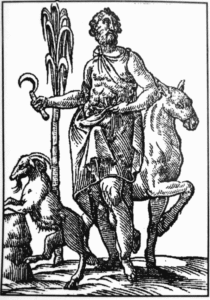
L’ancient coat of arms of Atina, in remembrance of its mythical foundation, bore
the image of Saturn under the figure of a winged old man, with a sickle in one hand and ears of corn in the other:
at the top are two columns on a blue field, surmounted by a crown, and around them the motto
Atina Civitas Saturni Latio
Currently the coat of arms of Atina presents only the columns with the crown and motto.
Atina was a formidable city, because from its forges it forged the best weapons of antiquity. In the’Aeneid, Virgil describes the ally of Shift, the king of the Latins, and against Enea. In Book VII he writes:
Quinque adeo magnae
Virgil - Aeneid - Book VII
positis incudibus urbes
Tela novant, Atina potens, Tiburque superbum, Ardea, Crustumerique, et turrigerae Antemnae
Five large cities with a thousand incudi
A frabbricare, a compensir si danno
Of all kinds weapons. The mighty Atina,
Ardea the ancient, Tivoli the superb,
And Crustumerio, and the torrid Antenna
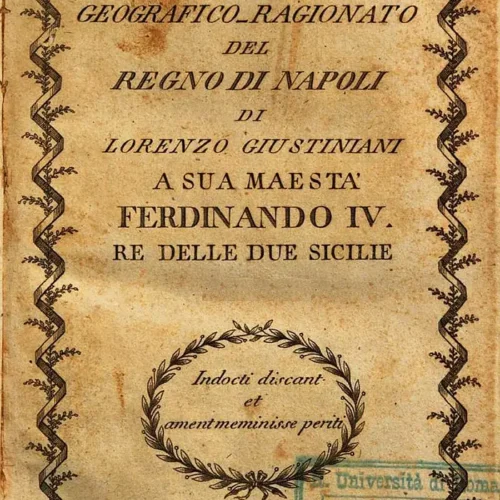
Atina in the Geographical-Regional Dictionary of the Kingdom of Naples (1797)
ATINA city in the Terra di Lavoro in the diocese of Aquino...
Terrisio di Atina and the Carnival
Terrisio di Atina, who lived in the first half of the 13th century, was...
Urban Development of Atina
This map shows the pattern of urban development in the centre...
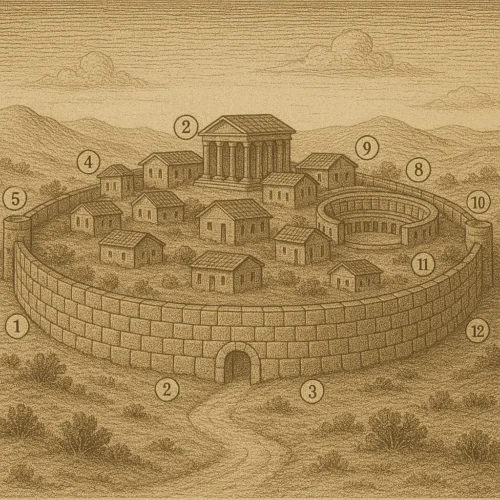
The Gates of Atina
The Roman Atina had three main gates (Aurea, because it was completely lined...


