From the martyrdom of St Nicander and St Marcian is also derived that of St Daria, who, three days after the passion of her husband Nicander, suffered the same persecution and, by order of the same governor, also received the crown of martyrdom. This is what the author of the Martyrology, printed in Lyons under the pontificate of Gregory XIII, says: [...].
Category: Uncategorized
St Nicander and St Marcian Martyrs
There have been various opinions about the homeland of these saints, the emperor who condemned them to death and the place where they were buried after their martyrdom. According to Paolo Regio, bishop of Vico Equense, Nicandro and Marciano were of African origin. He states: “These, born in Emesa of noble parents, according to the world, in the African region...”. However, the same [...]
Saint Passicrates, Martyr Atinate
According to ancient tradition and chronicles, it is firmly believed that the body of the martyr Passicrates still rests in the town of Atina. His martyrdom has been described in great detail, and in his honour, together with St Daria, a small temple was built in the place formerly known as “Granai e Orrei”, today known as “Broile”. This [...]
Visocchi Paper Mill
With the death of Jesus and the work of the Apostles, Christianity spread in Rome and throughout the world because of its witness of fervour, charity and brotherly love towards all. The civil authorities and the people themselves, distrustful at first, soon proved hostile to the new religion because it rejected the cult of the emperor and [...]
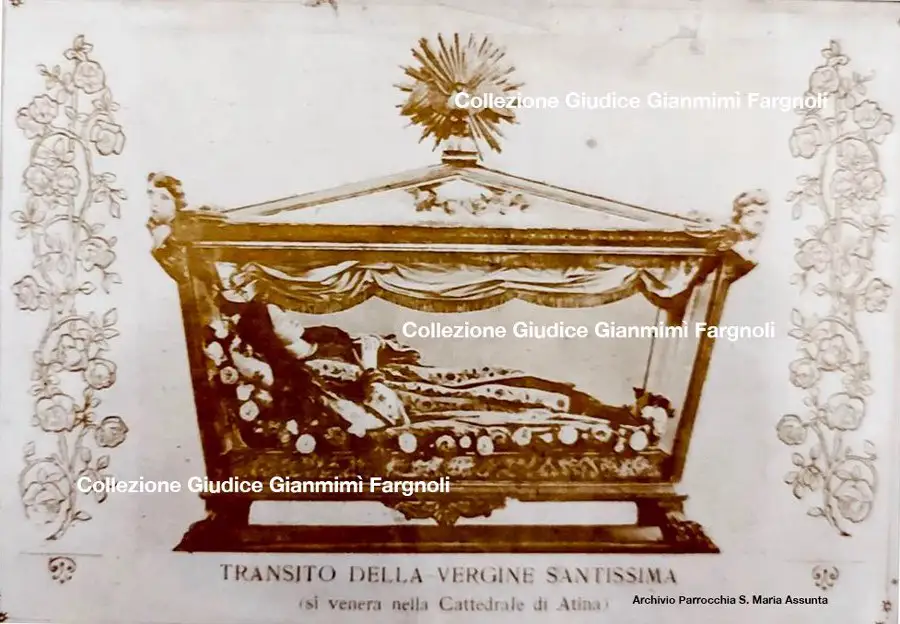
The finding of the statue (1856) In 1856, the remains of the ancient statue of the Dormant Madonna were found in Atina thanks to two devout citizens. They had been animated by tales, repeatedly heard by people worthy of faith, which told of the ancient feast and of the existence of a statue displayed on the occasion of the celebration of Mary's Transit. [...]
The urban structure of Atina originated in the Middle Ages and is centred on the Church of the Assumption built on the temple of Saturn and the palace built by the Dukes of Cantelmo in the 14th century on a pre-existing fortress; this first urban core was served by three main roads that are still connected by narrow staircases [...].