Categories
History

The gates of Atina

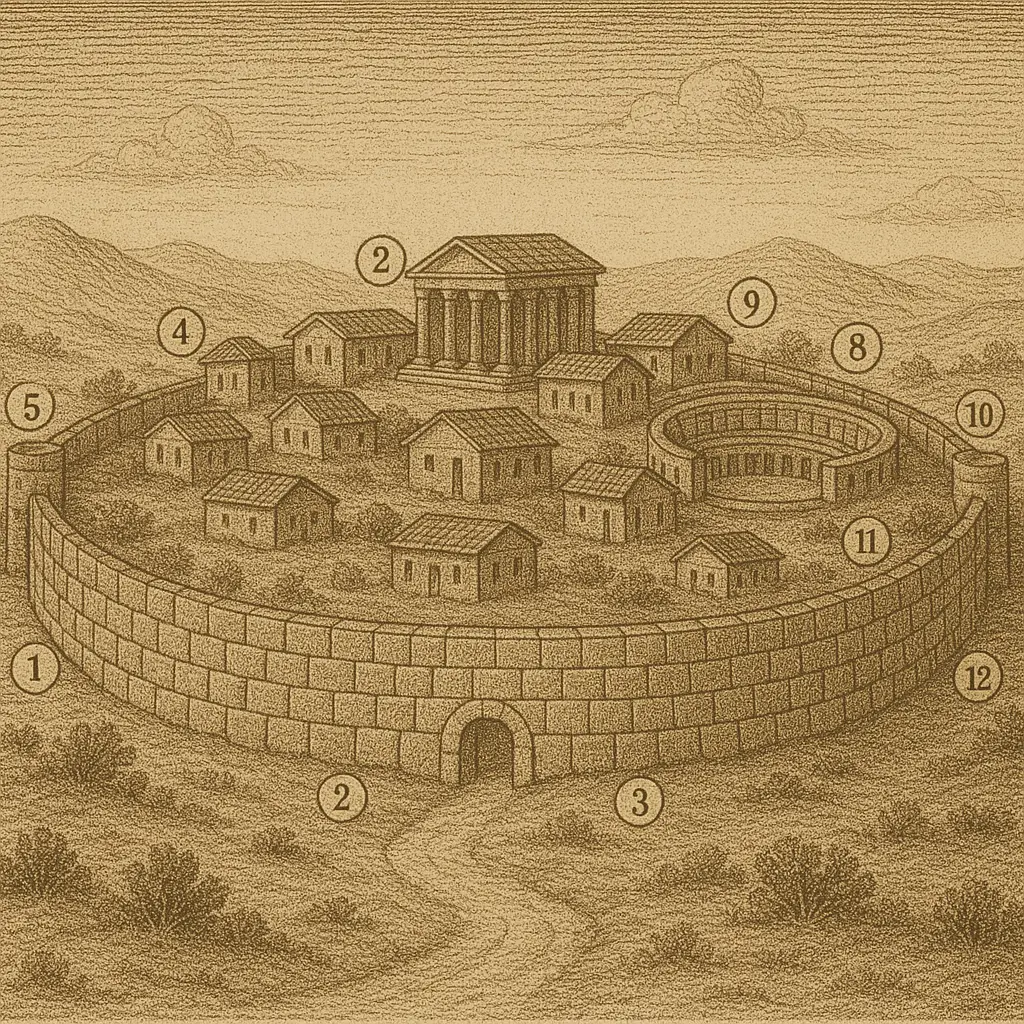
L’Roman Atina had 3 main doors (Aurea, because it is completely covered in bronze), facing north, Virilassi (because it is located near the amphitheatre), facing south-west, Balnearia (because it was located on the road leading to the imperial baths), facing east, circumscribing the administrative, political and religious core of the old city, and 7 other minor gates placed along the outer wall of the city-praefectura first and citta-municipium later.


In Middle Ages, the doors were still three, but set back from the Roman ones. The one in the photo is the St. Mary's Gate, located to the north. Then there was the Fountain Gate, south-west (disappeared) and the gate St. John, today dell'Arco, on Piazza Garibaldi, facing south-east.

The medieval village, built after the 1349 earthquake, which had destroyed the village and castle on St. Stephen's Hill, also had 24 towers. The Convent of St Francis or Friars Minor (f. 2), the only building outside the village, was built from 1630 onwards.

In the old town, on pre-existing pre-Roman, Roman and early medieval artefacts, numerous noble palaces were built, including Visocchi Palace (f. 3) and the Cantelmo Palace, named after the dukes of the same name.

Riccardi Orazio Paolo

Other interesting things...

The Tauleri family of Atina

The now extinct Tauleri family of Atina in the 17th century....

St. Valentine, Martyr Atinate

According to various ancient maps of the city of Atina, under the...

St. Stephen's Hill, Yellow Route “Medieval Village”

Atina, St. Stephen's Hill Yellow Trail - Medieval Village...

The Comino Valley, a mysterious valley

It is a land where history is intertwined with the...

Leave a Reply

Your email address will not be published. Required fields are marked *

en_GB