Quoted in the The Peutinger Map under the name of Melfel, lies at the foot of the Mount Meta and of the Mount Petroso, where a thousand springs of clear, cool water, beneath centuries-old beech trees, flow into the Canneto Valley, in the Municipality of Settefrati.
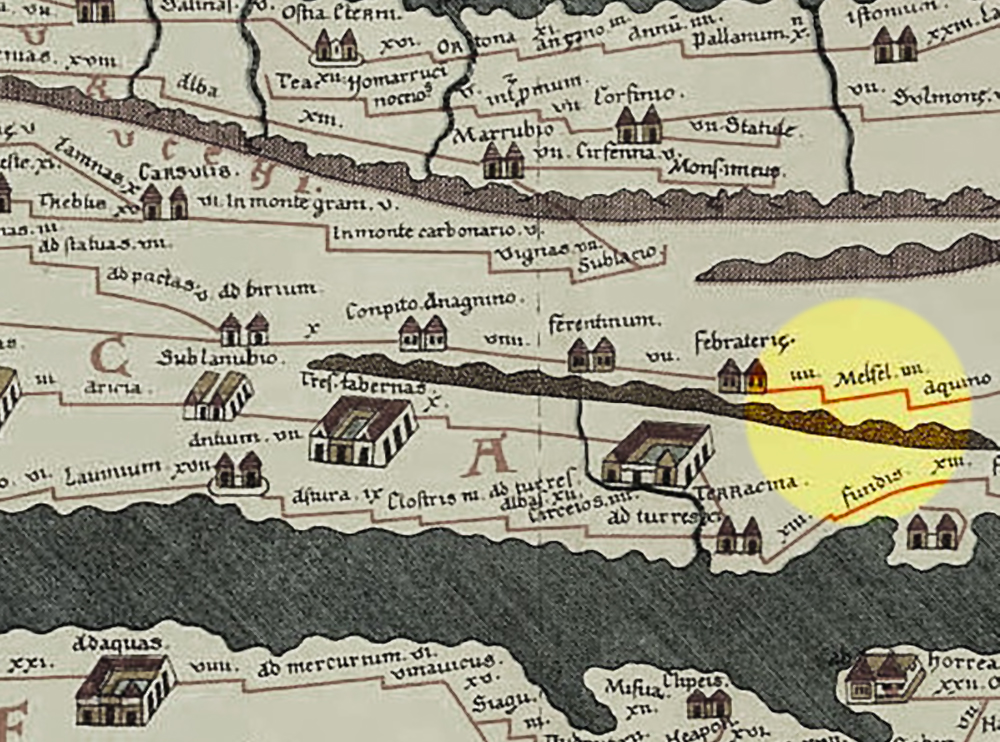
A land where ancient Italic peoples gathered (Volsci, Samnites, Marsi e Peligni), who had a temple here dedicated to the the goddess Mefite (6th/5th century BC), it later became a place of pilgrimage to the Black Madonna (now the Basilica and Shrine of the Blessed Virgin Mary), which supplanted the ancient pagan cult from the 8th century AD onwards.
The Melfa is mentioned by Strabo (Geography, V, 3, 9)
which describes it as a “great river”
near the large town of Aquino
From there it plunges down, forming hundreds of small waterfalls and whirlpools, which are emerald green, sapphire blue or indigo in colour, depending on the sky and the lush vegetation typical of the Mediterranean scrub, into the Comino Valley, in the area of Picinisco, passing beneath the ancient Roman bridge, known as The Branches and as we made our way through the enchanting Borgo Castellone, a factory village (paper mill), similar to San Leucio in Caserta, which once had a mill, an oil press, a shop selling food and other goods, a school and a church. Just before that are the dam and artificial lake by Grottacampanaro and a power station – the second to be built in Europe – which supplied power to paper mills and villages.
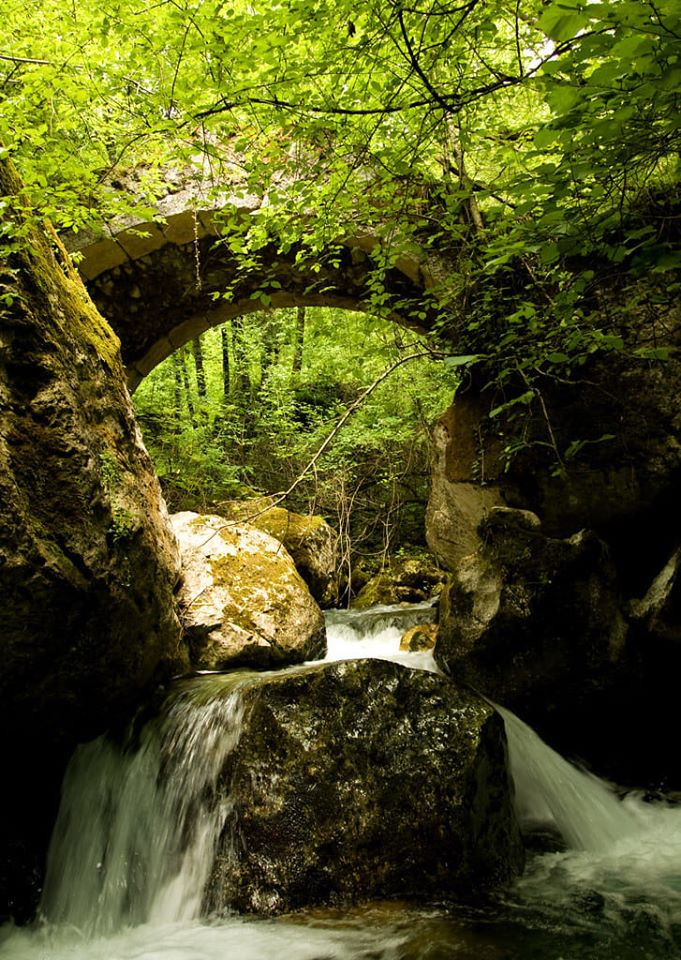
In the Atina Plain, the habitat of the exquisite “Cannellino DOP” bean” and the sumptuous “Cabernet DOC”, joins the stream Mollarino, whose springs rise in the Mainarde mountains, in the municipality of S. Biagio Saracinisco.
It then continues, running alongside the old Visocchi paper mill and the historic mill of S. Nazario in Casalattico.
Finally, after the Roman bridge on the Casalvieri plain in the Plauto district, it enters the spectacular Gorges, before joining the River Liri near Roccasecca.
Riccardi Orazio Paolo


