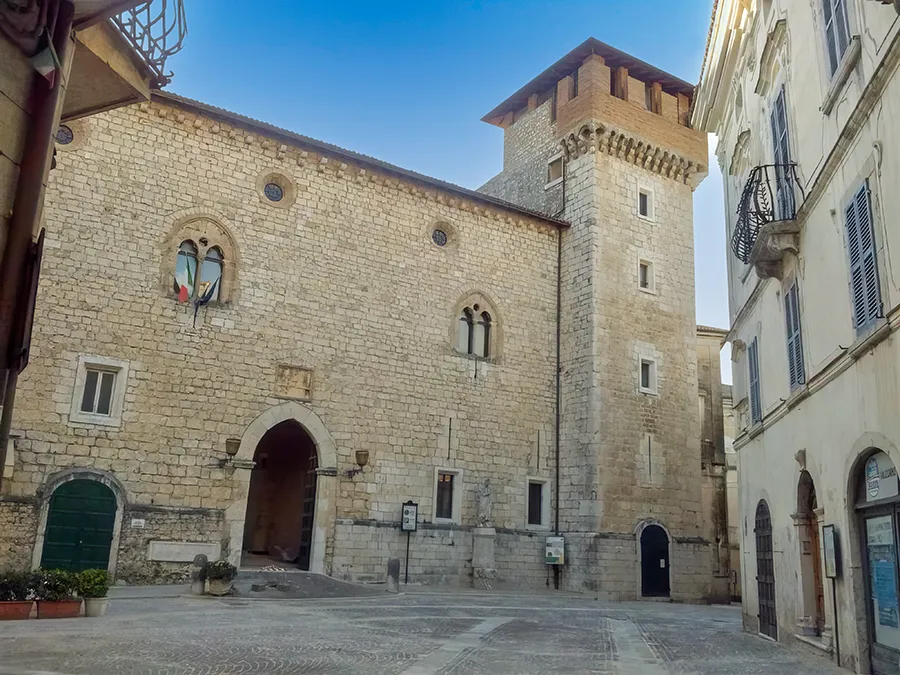
In 589 AD, during the Lombard invasion led by Duke Zottone, the monumental Roman-style city suffered destruction and ruin. The final blow came with the earthquake of 1349, which razed to the ground the Roman remains and the early medieval village. Atina was rebuilt—still on the site of the ancient Roman city—but on a smaller scale, following new urban planning principles introduced by the Cantelmo family.
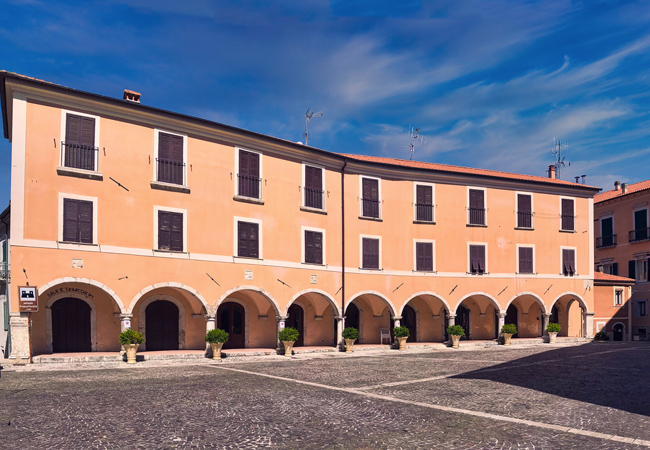
On the same site where the d’Aquino family had built the original fortress two centuries earlier, the Cantelmo began constructing this magnificent palace, which two centuries later Giulio Prudentio described as “a court in the style of the Castle of Alvito, comfortable for the Captain and others.”
Sporadically inhabited by the dukes until 1458, the palace was later ceded, at the end of the 15th century, to Count Diomede Carafa of Maddaloni, who used it as the residence for the lieutenants and field masters of the ducal house.
In the 19th century, it passed to the Paniccia family of Vicalvi, who sold it to the municipality in 1870.
In 1887, Cesare Pascarella described it as:
“dominated by a crenellated tower. Once the lords of Alvito lived here; now it hosts two muses, Tragedy and Comedy—that is, the prison and the theatre.”
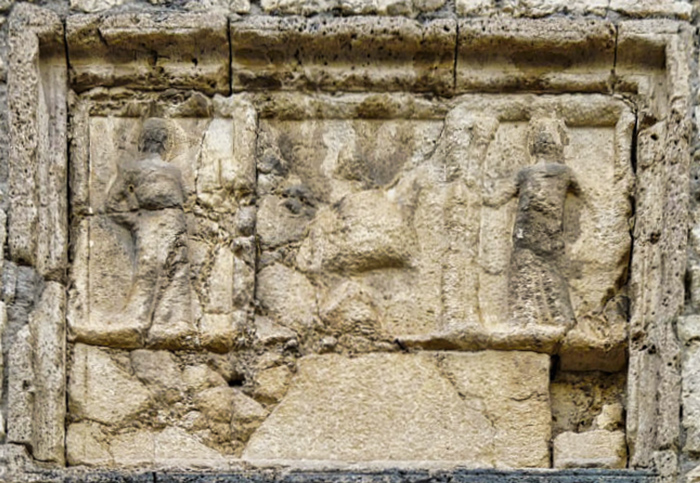
Its elegant silhouette rises at the center of the old village. The façade is flanked by two projecting towers and adorned with beautiful mullioned windows and splayed rose windows. Above the entrance portal, a Roman frieze leads us into one of the best-preserved medieval palaces in southern Lazio. Of particular note is the chapel dedicated to Saint Onuphrius, which houses 14th-century frescoes.
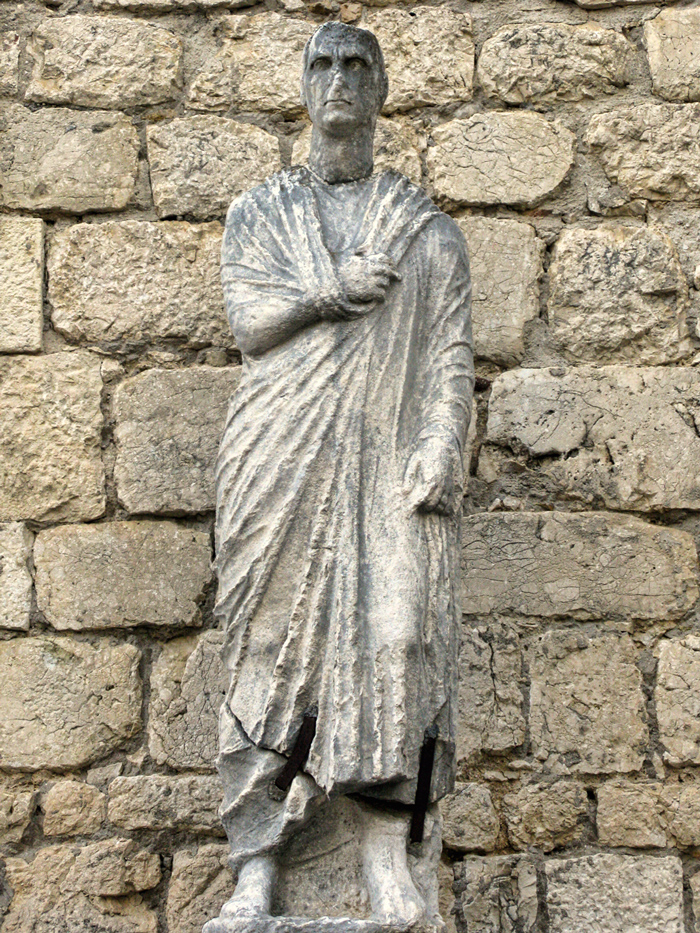
Outside, to the right of the entrance, stands a statue in a toga, commonly called the statue of Pasquino. The inscription at its base refers to Emperor Marcus Aurelius Antoninus (161–180), who owned a villa in Atina where he would rest from the burdens of government. The monument was erected by decree of the council of decurions.
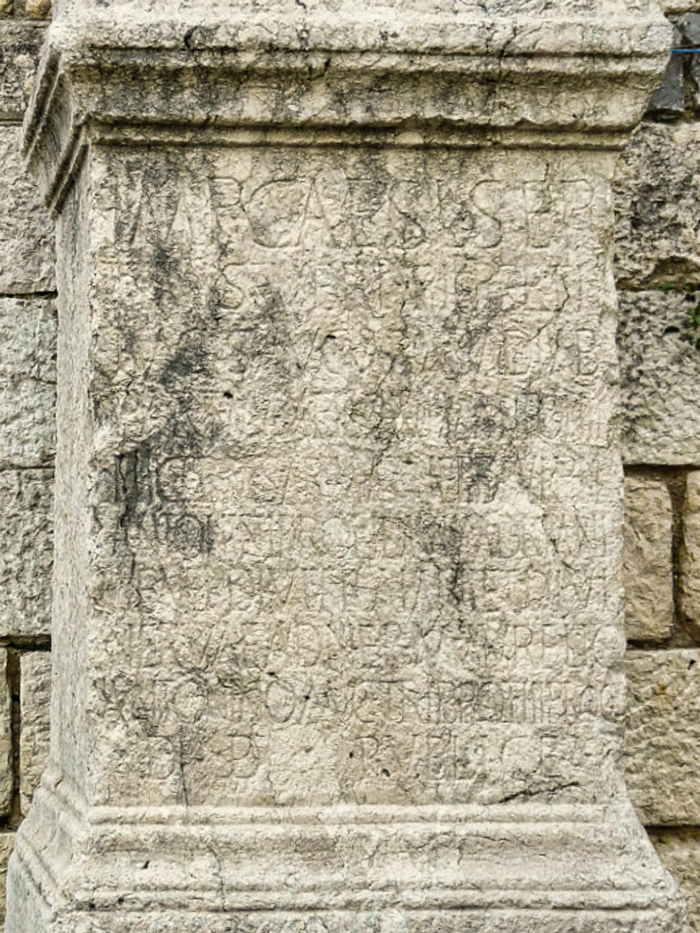
“IMP CAES L SEP / TIMI SEVERI PIL PERTI NACIS AVG ARAB ADIAB / PART MAX FIL DIVI MANTONINI / 5 PII GERM SARMAT NEP DIVI PILL ANTONINI PRON DIVI HADRIANI I ABNEP DIVI TRAIANI ET DIVI-/ NERVAE ADNEP M AURELIO TANTONINO AUG TRIB POT I PROCOSP.C.200 / 10 D D PUBLICE” (C.I.L. 5052),
Several other inscriptions are preserved on the outer walls. One comes from the courtyard of the Casino Visocchi in Settignano, site of the ancient Villa Septa Jani:
“C LVCCIO C FITER PAETOIC LVCCIO C FI FILIO RVFOI GENTIA C F FECIT” (C.I.L. 5091) “To Gaius Luccius Paetus, son of Gaius, of the Teretina tribe. For their son Gaius Luccius Rufus, son of Gaius, Gentia, daughter of Gaius, had this monument made”
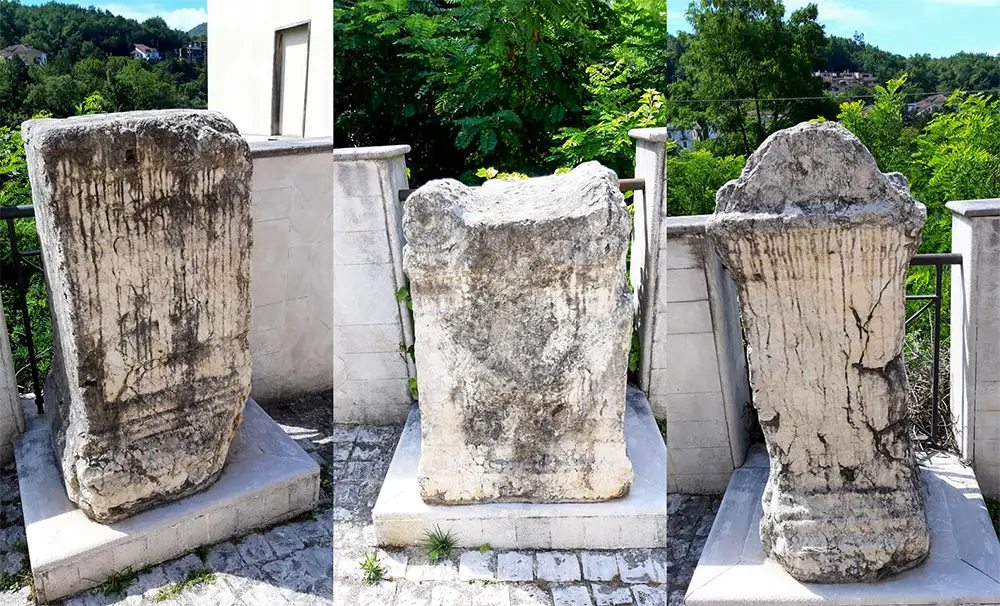
Among the artifacts preserved in the atrium are the remains of some columns, a Doric frieze, and an altar. Its inscription records that, during the century, the citizens of the municipium, using funds raised among themselves, dedicated a monument to Gaius Avidius Clemens, son of Gaius, of the Teretina tribe, aedile, duumvir, and knight of the State:
“CAVIDIO CFTER / CLEMENTI AED | VIR / EQVO PVBLICO / urceus MVNICIPES ET INCOLAE patera/5AERE CONLATOIL DD D” (C.I.L. 5066).
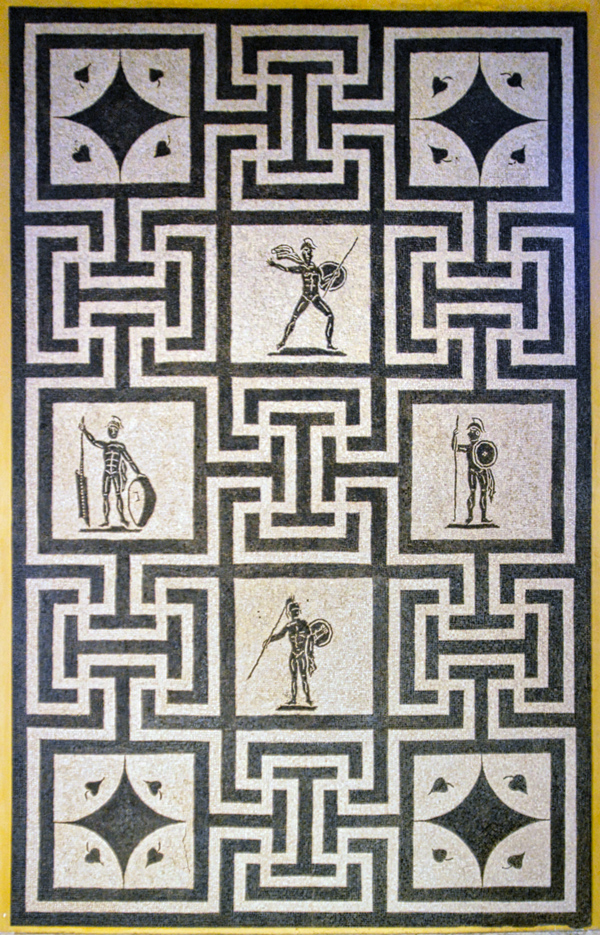
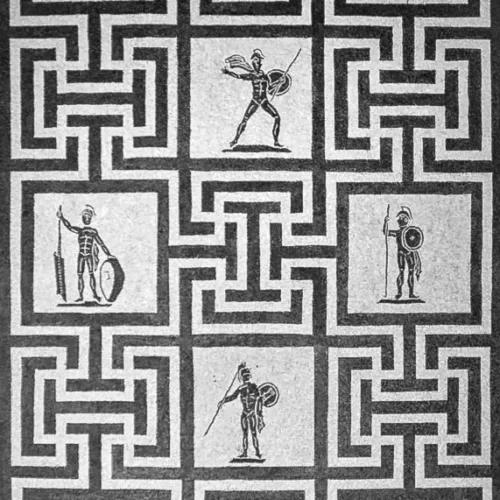
The most precious element, absolutely worth a visit, is the magnificent mosaic dedicated to a Roman warrior (some scholars suggest he may be a Samnite soldier), shown nude, wearing a crested helmet, cloak, holding a spear and shield. He is depicted in four distinct postures, illustrating different phases of combat. Remarkable for its size (7.30 x 4.20 meters) and refined workmanship, the mosaic is made of black and white tesserae. Originally, it adorned the atrium of a wealthy Roman domus.
Terrisio di Atina and the Carnival
Terrisio di Atina, who lived in the first half of the 13th century, was...
The Second World War: The Atinates Rescued in Assisi
A forgotten story from the Second World War: the people of Atina who were saved…
Atina according to Ferdinando Pistilli
It is one of the oldest cities in Italy, which today…


2 replies on “Palazzo Ducale “Cantelmo””
He is a Samnite warrior, specifically from the Pentri people. Atina had a strong Samnite culture in antiquity. Just read Cicero. The areas of lower Latium bordering on Abruzzo, Molise and Campania were strategic areas for the Samnite populations, access routes to Sannio . Samnium was endless in terms of territory...
Translations of epigraphic texts
[Epigraph by “Pasquino”] To the Emperor Caesar Lucius Septimius Severus Pius Pertinace Augustus, victor over the Arabs, over the Adiabians, greatest victor over the Parthians, son of the divine Marcus Antoninus Pius, Germanicus, Sarmatius, grandson of the divine Antoninus Pius, great-grandson of the divine Hadrian, great-grandson of the divine Trajan and the divine Nerva, and to Marcus Aurelius Antoninus Augustus (Caracalla), invested for the first time with tribunician power, proconsul, (dedicated) by decree of the decurions, publicly, in the year 200.
[Epigraph of the Casino Visocchi] Gentia, daughter of Gaius, made (this monument) for Gaius Lucius Paetus, son of Gaius, of the Itertine tribe, and for his son Gaius Lucius Rufus.
[Atrium epigraph] To Caius Avidius Clement, son of Gaius, of the Teretine tribe, aedile, decorated man of the public horse,
the citizens and residents of the municipality dedicated, with money collected, an urceus and a patera, by decision and dedication of the decurions.